
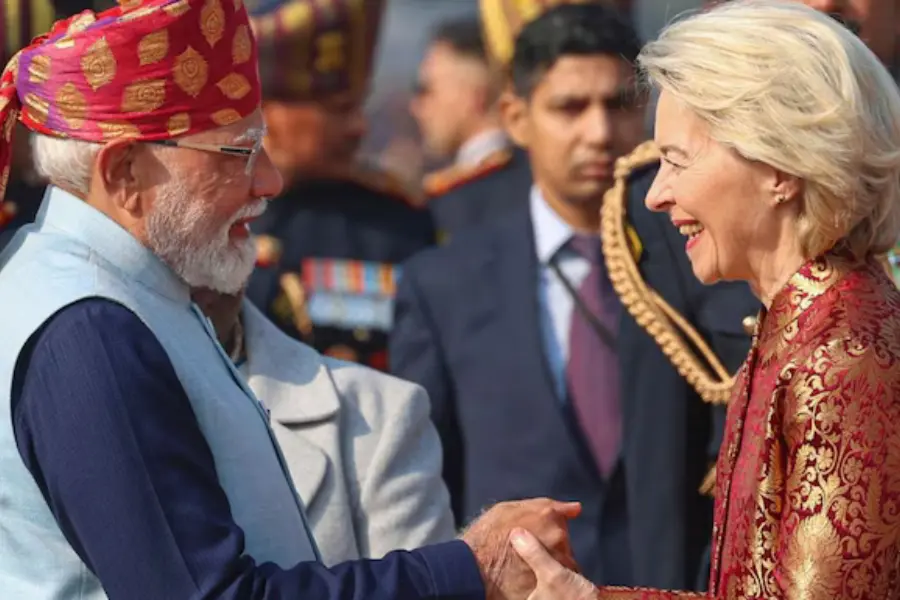
On January 27, 2026, the 16th Summit of India and the European Union (EU) will mark a major shift in the scope of their bilateral ties. It is being held in conjunction with a large increase in security presence and traffic limitations around New Delhi. It is due to the EU leaders’ anticipated appearances at Rajghat.
Traffic Control Measures Prior to EU Delegation Arrival
As a precautionary measure for the convenience of EU leaders on their way to Rajghat. The Delhi Police have enacted temporary traffic limits and restrictions in all areas around Rajghat. As such, people travelling to see the EU delegation are encouraged to plan their trips accordingly. Also, stay up-to-date on any potential roadwork alerts and traffic disruptions to ensure timely arrival. These limits and restrictions are part of the overall security protocols for the summit. This have also been in the news this morning due to their inherent diplomatic and commercial importance.
High-Level Delegations to be Discussed
The summit will involve PM Narendra Modi meeting with senior executives of the E.U. at the Delegation level. It is anticipated that they will meet with the President of the E.U. Commission Ursula von der Leyen. The President of the E.U. Council Antonio Costa to discuss various issues, such as increasing trade cooperation among both the E.U. and India. Also, as well as expanding cooperation in areas of security, climate, and politics on a global scale.
Both sides have stated that the summit represents an important milestone in India-EU relations. With shared democratic principles and more closely aligned policies on a number of regional and international issues.
Security and defence cooperation will comprise the primary focus areas on the agenda for the summit. An important feature of the summit will be an agreement to form a Security and Defence Partnership (SDP). This will be aimed at improving co-operation between the E.U. and India in the fields of military cooperation and maritime security, cyber threats, and anti-terrorism strategies. According to officials, this agreement provides a long-lasting cooperation agreement for both the E.U.. Also, India in these areas of future cooperation, and reflects the changing political landscape of the strategic partnership between India and the E.U.
The SDP seeks to build on existing structures to facilitate improved co-ordination in responding to the evolving global security environment.
Completion of the India-EU FTA Negotiation Process
On Monday, India’s Secretary of Commerce Rajesh Agrawal confirmed that the official negotiations for the India-EU Free Trade Agreement (FTA) are now complete. Paving the way for both parties to formally announce the successful conclusion of negotiations on January 27th.
The FTA is the outcome of years of discussions that began back in 2007. So it has taken almost 20 years for the process to be concluded. Currently, the value of the bilateral trade between India and EU stands at U.S.$136 billion. It makes this FTA the largest and most important bilateral trade agreements worldwide.
The comments of the European leaders, who recently visited India, support the view that “a prosperous India is good for creating a better world,” and as a result, these leaders view continued partnership between India and Europe as very valuable for the future of both economies.
The summit happens amidst dramatic upheaval in our global economy, and so many new geopolitical players are trying to change the way we do business. As a result, analysts predict that further collaboration between India and EU will make a huge impact on global trade, supply chain management, and international governance.
In trending news today, the summit is surrounded by significant security measures, and they will probably remain until after the summit takes place. This gap of increased attention to this summit created high levels of interest in this summit because it represents an opportunity to strengthen relations between India and the European Union.