
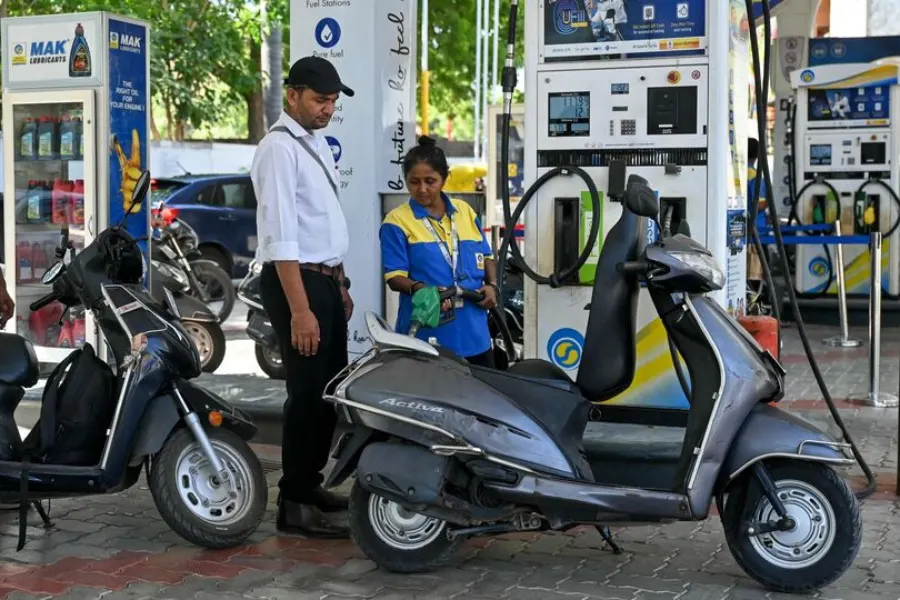
Consumers faced another negative shift yesterday with petrol and diesel prices rising close to 90 paise per litre nationwide. This is the second increase in fuel prices in just five days, adding almost ₹3.90 to total fuel costs. As fuel price increases are generating media coverage, the recent news updates has been dominated by concerns over rising global crude oil prices caused by instability in West Asia.
Petrol and Diesel Prices Increased in Major Cities
An update out today reflects increases to all of the major cities in the country, with Kolkata experiencing the largest price increases versus Delhi, Mumbai, and Chennai.
In Delhi, petrol is now ₹98.64 and diesel is now ₹91.58, both increased by 87 and 91 paise respectively.
The price of petrol in Mumbai rose by 81 paise to ₹107.49, and diesel increased by 88 paise to reach ₹94.02 per litre.
Kolkata has increased 96 paise to ₹109.70 per litre, and diesel has risen 94 paise to ₹96.07 per litre. Kolkata experienced the largest price increases among the major metropolitan areas.
Petrol in Chennai increased by 82 paise per litre to ₹104.49, while diesel increased by 86 paise per litre to ₹96.11.
Premium Fuel Variants Also Become Expensive
Indian Oil’s premium diesel (XG) now costs ₹96.90 per litre due to a rise of 91 paise, while XP95 petrol increased by 87 paise per litre to ₹105.76.
People in the industry believe that these recent price increases are a result of rising international crude oil prices and severely affect oil marketing companies’ ability to absorb very high crude oil prices.
As of Tuesday morning, Brent Crude for July was trading at over $109 a barrel, and India’s Crude Basket averaged $106.69 a barrel in the first half of May.
Geopolitical issues in the Middle East are creating uncertainty in oil prices on the global market, and it appears that these most recent price adjustments are an attempt on the part of the oil marketing companies to minimize their losses without causing an immediate inflationary effect.
Impact on Inflation and Consumers
The increase in gasoline prices will likely result in increased transportation costs and higher household spending in the near future. Fuel inflation has already increased wholesale inflation (8.3% in April 2026), the highest since 42 months ago.
The government has also recommended creating ways to save fuel, such as reducing travel and encouraging more telecommuting to help with rising energy costs and preserve foreign exchange reserves.
With global crude price instability, consumers will continue to feel pressure at gas pumps for some time.