
Bangladesh Election Results 2026: Tarique Rahman Set to Lead
thenewsbuzz February 13, 2026 13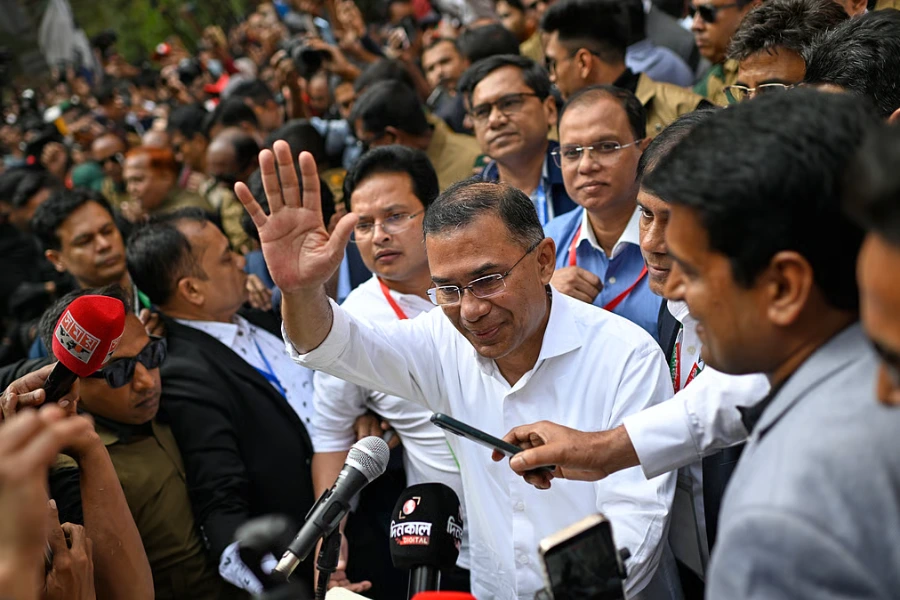
In an important diplomatic move after the Bangladesh national elections, Prime Minister Narendra Modi praised Tarique Rahman. It was after the Bangladesh Nationalist Party (BNP) announced a significant win. As the final results are pending, Rahman is set to be the next Prime Minister of Bangladesh.
In a message on X, PM Modi offered his “heartfelt congratulations” to Rahman. This indicated that the win demonstrates the confidence of the Bangladeshi populace in his leadership. He further confirmed ongoing Indian backing for a “democratic, progressive, and inclusive Bangladesh”. It emphasizes the significance of regional stability and collaboration in the latest updates from South Asia.
India Reinforces Backing for Democratic Bangladesh
PM Modi’s message highlighted India’s dedication to enhancing bilateral relations. “I am eager to collaborate with you to enhance our diverse relations and promote our shared development objectives,” he stated.
The declaration indicates New Delhi’s willingness to interact positively with the new leadership in Dhaka. India and Bangladesh have strong historical, cultural, and economic connections. This makes the political stability in Dhaka essential for regional peace and progress.
A Fresh Start Following Tense Interactions
The congratulatory message arrives during a period when relations between New Delhi and Dhaka have faced challenges. Under interim Chief Muhammad Yunus, worries increased regarding border security, unlawful migration, and domestic unrest. Anti-Hindu feelings are said to have risen following the removal of former Prime Minister Sheikh Hasina. She escaped to India on August 5, 2023, after a student-led revolt.
Under Hasina’s leadership of the Awami League, India and Bangladesh maintained fairly stable relations. Her administration prioritized improving trade links, transport pacts, border security collaboration, and water distribution systems. Nonetheless, her lack of participation in the current election and the BNP’s resurgence signify a new phase in bilateral relations.
Historical Worries Regarding BNP Governance
India’s strategic community remembers the BNP’s governance from 2001 to 2006 as a difficult time. It is characterized by cross-border insurgency matters and the 2004 Chittagong arms haul event. Here arms were reportedly trafficked to anti-India militant factions.
Recent events still influence New Delhi’s careful strategy. Tarique Rahman, however, has aimed to comfort India and the global community by committing to enhanced counterterrorism collaboration, renewed attempts to solve the Teesta water-sharing problem, and safeguarding Hindu minorities in Bangladesh.
“Bangladesh First” and Strategic Consequences
Rahman’s “Bangladesh First” doctrine indicates a policy framework centered on national interest, prompting inquiries regarding the nearly complete strategic alignment observed during the Hasina period. Although this strategy might adjust Dhaka’s foreign policy, analysts suggest that shared economic interests and geographic factors will maintain a close relationship between India and Bangladesh.
According to recent news updates, both countries are anticipated to emphasize trade growth, infrastructure projects, and security collaboration in the upcoming months. A lot will rely on how the new government manages internal political demands alongside regional diplomatic efforts.
Thanks to PM Modi’s initial engagement, the groundwork seems prepared for a diplomatic renewal. The extent to which this results in closer collaboration or careful interaction will influence the future of India-Bangladesh ties in the coming years.


4j5cj3
hp0fr0
A888bet? Yeah, I mess with that. Plenty of options, you know? Worth checking out: a888bet
Hey guys! Spent some time on 735betcom. Has a good range of stuff. Could be worth a look. Check out 735betcom and see if anything catches your eye.
Yo yo yo! Dropped by 76nbetlogin. Seems legit. Worth checking out if you are looking for something new. Click 76nbetlogin, might strike gold.
High-stakes gaming is definitely evolving! Seeing platforms like 1plus ph casino games focus on VIP experiences & fast deposits (15 secs!) is a smart move. Prioritizing security with KYC is key too – builds trust. What are your favorite high-roller slots?
This diplomatic transition between India and Bangladesh highlights the importance of regional stability for economic growth. Just as regulated platforms like 88 lucky ph casino demonstrate how proper governance builds trust, transparent leadership transitions strengthen international partnerships essential for South Asian development.
Yo yo yo! Dropped by 76nbetlogin. Seems legit. Worth checking out if you are looking for something new. Click 76nbetlogin, might strike gold.
Hey everyone! Scoped out 777wim, pretty solid. If you’re into cool vibes, go and check it out 777wim.
Alright guys, checking out aa888br. Seems interesting enough. Hope it’s not a let down. Wish me luck! You can find it here: aa888br
Looking for a hassle-free GCash experience Arionplaygcash is the way to go Fast transactions and reliable service Check it out arionplaygcash
P898login is a solid choice for a quick gaming session. Login is smooth and quick. A good place for a casual game: p898login
Phlbest, eh? Not bad, not bad at all. Everything seems pretty straightforward. Worth a look if youre exploring your options! Find it here: phlbest