
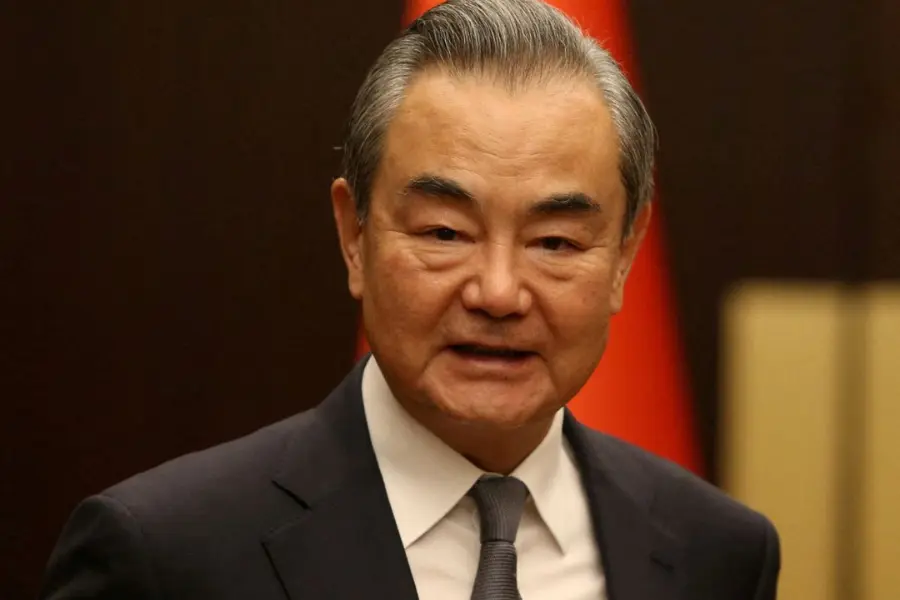
Beijing’s assertion that it has played an “intermediary” role in the conflicts between New Delhi and Islamabad that occurred in mid-May, 2025, during “Operation Sindoor” have triggered renewed discussions about the diplomatic relationship between China and both countries. It has underlined China’s perceived role as a regional power. This announcement was made by the Chinese foreign minister, Wang Yi. As he discussed the Chinese government’s foreign policy plans for 2025. Following this announcement, the Indian government issued a public statement denying that any “cessation of hostilities” could have taken place through Chinese intervention. Also, the ceasefire was solely a result of discussions between the Indian and Pakistani militaries.
Wang Yi claimed that China has acted as a “Third Party Mediator” to the world during 2025. It provided assistance to resolve several “hotspots” around the world. This included “India and Pakistan”. He emphasized that the Chinese approach to mediation is neutral. Also, he focused on addressing both “immediate concerns” and “underlying issues”.
Wang Yi went on to explain the areas of “hotspots”. This also include: northern Myanmar; the Iranian nuclear issue; Palestine-Israel; and the recent conflict between Cambodia and Thailand. Wang Yi made these remarks while at a time of heightened global insecurity. He has recently identified as being greater than at any time since World War II. A view that has been featured prominently in many recent media reports on both China and the world.
India Opposes International Mediation
India has consistently opposed any notion that third party mediation is necessary regarding issues relating to India and Pakistan. On May 13 of this year, the Government of India Ministry of External Affairs provided clarification. It was regarding the recent ceasefire agreement stating that it existed between the respective Directors General of Military Operations of both countries as a result of the course of their meeting on May 10, 2020 at 15:35 H GMT.
The Government of India further clarified that “there is absolutely no need for any form of third party mediation.” Effectively reiterating India’s long-held view that bilateral issues need to be resolved by means of direct dialogue between the two parties.
Chinese Military Aid to Pakistan Draws Controversy
There has also been controversy surrounding the Chinese government providing military assistance to Pakistan. In addition to the diplomatic implications stemming from China’s participation in Operation Sindoor. China has emerged as the largest arms provider to Pakistan. It is supplying in excess of 81% of Pakistan’s military hardware to date.
This close relationship has been identified as creating complexity in the relationship between China and India.
The Deputy Chief of Army Staff of India Lt. General Rahul R. Singh contends that China used the conflict as a “live laboratory,” thereby giving significant assistance to Pakistan. Using traits of traditional Chinese military strategy, he alluded to the possibility of China using indirect means to weaken India. In response, Chinese authorities have declined to respond to this allegation while attempting to de-escalate it.
China expressed its regret on May 7, the first day of Operation Sindoor, about the air strikes conducted by India and called for both countries to exercise restraint. China reaffirmed its opposition to terrorism, implicitly referencing the Pahalgam attack; however, it simultaneously called for de-escalation of the situation, which was met with many different reactions in India.
Wang Yi acknowledged a “positive trend” in the development of bilateral relations between China and India, due to India’s participation in the Shanghai Cooperation Organisation (SCO) summit in Tianjin, China, in August. According to Wang, the invitation for Indian Prime Minister Narendra Modi to attend the summit represents a positive step forward despite the continued existence of lingering conflicts.
International Context
Wang made reference to the fact that China is a member of BRICS and defined the larger grouping as being stronger than the original five countries, and mentioned that there are obstacles to the globalisation of economies that come from the imposition of tariffs, indirectly referencing some of the trade policies of the United States. In regard to China-U.S. relations, he stated that there is a need for dialogue and mutual respect and that the relationship between these two countries is among the most important in the world.
With Beijing claiming a mediating position and New Delhi vigorously rejecting it, the incident highlights the intricacies of regional diplomacy in South Asia. As military realities, diplomatic stories, and strategic competitions converge, the consequences of Operation Sindoor continue to influence recent news updates and regional geopolitics.





situs toto
situs toto
I am thanksful for this post!
Gonna give b77betgame a try tonight. Feels like a lucky night! Hope I hit the jackpot! b77betgame
Yo, anyone else using w88nhacai? The odds seem alright and the site’s pretty smooth. Been having some decent wins lately. What do you think? Get in on the action at: w88nhacai
Hey guys, I found this site sv388thomosv388 pretty useful. Check it out if you’re into that sort of thing!
**mitolyn official**
Mitolyn is a carefully developed, plant-based formula created to help support metabolic efficiency and encourage healthy, lasting weight management.
QQ68club is new to me, but I’ve already spent some hours. Pretty positive experience so far! Gotta say, I like a variety of what the club offers.qq68club
Yo, kk777slot is alright. I’ve had some decent luck there, nothing crazy, but definitely worth checking out for a few spins. Good times!. Check it out at kk777slot
Hey, 6623a, sounds interesting. Gave it a whirl and it’s not bad, not bad at all. The site’s smooth and had a good time playing. Why not give it a look-see, yeah?. Check it out at 6623a
Do you have a spam problem on this blog; I also am a blogger, and I was wondering your situation; we have developed some nice practices and we are looking to trade strategies with others, please shoot me an e-mail if interested.
I am not positive the place you are getting your information, however good topic. I needs to spend some time learning much more or working out more. Thanks for fantastic info I used to be looking for this info for my mission.
I am glad to be one of many visitors on this outstanding website (:, thanks for putting up.
Новичкам стоит разобраться, как пользоваться хрумером https://www.olx.ua/d/uk/obyavlenie/progon-hrumerom-dr-50-po-ahrefs-uvelichu-reyting-domena-IDXnHrG.html, чтобы избежать ошибок при настройке.
Hiya, I’m really glad I’ve found this information. Today bloggers publish only about gossips and internet and this is really irritating. A good blog with exciting content, that is what I need. Thank you for keeping this site, I will be visiting it. Do you do newsletters? Can’t find it.
Generally I do not learn post on blogs, however I wish to say that this write-up very forced me to check out and do so! Your writing style has been amazed me. Thank you, very great article.
Wow that was strange. I just wrote an extremely long comment but after I clicked submit my comment didn’t show up. Grrrr… well I’m not writing all that over again. Anyway, just wanted to say superb blog!
Wow, incredible weblog format! How lengthy have you ever been running a blog for? you made running a blog look easy. The full glance of your website is magnificent, let alone the content!
Regards for all your efforts that you have put in this. very interesting information.
Very interesting info !Perfect just what I was looking for!
Howdy this is kind of of off topic but I was wanting to know if blogs use WYSIWYG editors or if you have to manually code with HTML. I’m starting a blog soon but have no coding expertise so I wanted to get advice from someone with experience. Any help would be enormously appreciated!
I genuinely enjoy reading through on this internet site, it has got great blog posts.
of course like your web site but you have to check the spelling on several of your posts. A number of them are rife with spelling issues and I to find it very bothersome to tell the reality then again I will definitely come again again.
As I web-site possessor I believe the content material here is rattling wonderful , appreciate it for your efforts. You should keep it up forever! Good Luck.
I also conceive so , perfectly indited post! .
I would like to thnkx for the efforts you have put in writing this blog. I am hoping the same high-grade blog post from you in the upcoming as well. In fact your creative writing abilities has inspired me to get my own blog now. Really the blogging is spreading its wings quickly. Your write up is a good example of it.
I like this weblog so much, saved to bookmarks. “To hold a pen is to be at war.” by Francois Marie Arouet Voltaire.
There is noticeably a bundle to realize about this. I believe you made some nice points in features also.
I do not even know the way I stopped up here, however I believed this post was once great. I don’t recognize who you’re however certainly you are going to a famous blogger when you aren’t already 😉 Cheers!
Hey There. I found your blog using msn. This is an extremely well written article. I’ll be sure to bookmark it and come back to read more of your useful info. Thanks for the post. I’ll certainly return.
Hi! This is my first visit to your blog! We are a group of volunteers and starting a new project in a community in the same niche. Your blog provided us valuable information to work on. You have done a wonderful job!
We are a group of volunteers and opening a new scheme in our community. Your site offered us with valuable information to work on. You’ve done a formidable job and our whole community will be grateful to you.
Oh my goodness! an incredible article dude. Thank you However I am experiencing problem with ur rss . Don’t know why Unable to subscribe to it. Is there anyone getting identical rss drawback? Anyone who knows kindly respond. Thnkx
As I website owner I think the content material here is really great, thankyou for your efforts.
Way cool, some valid points! I appreciate you making this article available, the rest of the site is also high quality. Have a fun.
Somebody essentially help to make critically posts I’d state. That is the very first time I frequented your website page and so far? I amazed with the analysis you made to create this particular post amazing. Fantastic task!
Do you have a spam problem on this blog; I also am a blogger, and I was wanting to know your situation; many of us have developed some nice practices and we are looking to trade techniques with other folks, please shoot me an e-mail if interested.
very nice put up, i certainly love this web site, keep on it
Everything is very open and very clear explanation of issues. was truly information. Your website is very useful. Thanks for sharing.
Simply want to say your article is as amazing. The clarity in your post is just nice and i can assume you are an expert on this subject. Fine with your permission let me to grab your RSS feed to keep up to date with forthcoming post. Thanks a million and please continue the enjoyable work.
I have been reading out many of your posts and i can state pretty good stuff. I will make sure to bookmark your website.
Hi, I think your site might be having browser compatibility issues. When I look at your website in Safari, it looks fine but when opening in Internet Explorer, it has some overlapping. I just wanted to give you a quick heads up! Other then that, fantastic blog!
Hey I am so glad I found your blog, I really found you by error, while I was searching on Digg for something else, Regardless I am here now and would just like to say thanks a lot for a remarkable post and a all round entertaining blog (I also love the theme/design), I don’t have time to read through it all at the moment but I have bookmarked it and also added your RSS feeds, so when I have time I will be back to read a lot more, Please do keep up the superb work.
I love your blog.. very nice colors & theme. Did you create this website yourself? Plz reply back as I’m looking to create my own blog and would like to know wheere u got this from. thanks
Woh I like your content, saved to favorites! .
That is really fascinating, You are an excessively skilled blogger. I have joined your feed and sit up for in quest of extra of your excellent post. Additionally, I’ve shared your website in my social networks!