NASA has taken a major step forward in exploring space with the launch of its newest Artemis II mission. It has sent astronauts on an incredible mission around the Moon. This mission has garnered global attention. As it helps support the analysis of recent advancements in technology being used in India and around the world in terms of technological advances in the field of space science.
Launch of Artemis II Mission from Kennedy Space Center is a Strong One
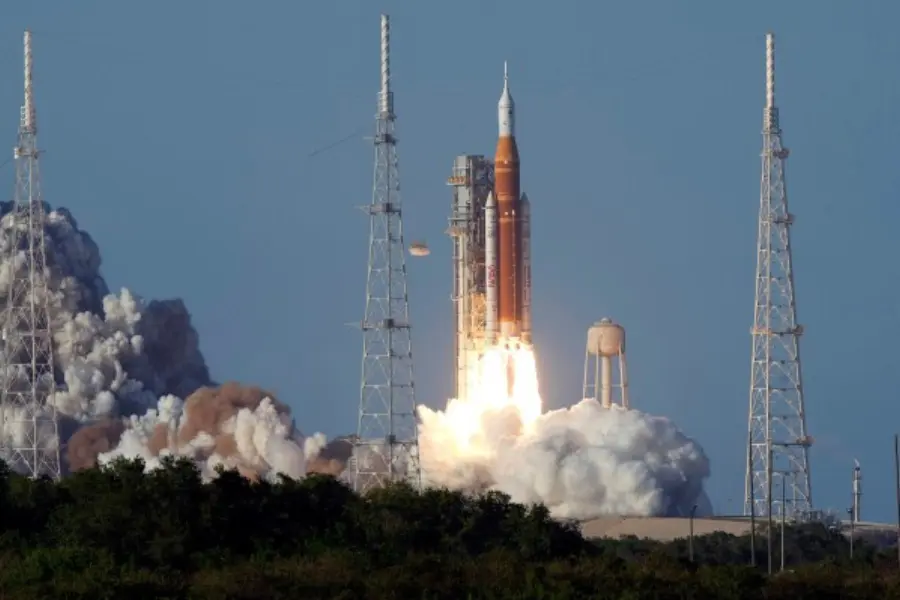
On April 1, 2026, NASA successfully launched Artemis II from the Kennedy Space Center using the Space Launch System (SLS) rocket. It send four astronauts into orbit as the first lunar crew to complete a mission in more than 50 years.
The NASA Artemis II Crew consists of:
- Reid Wiseman (Captain)
- Victor Glover (Aviator)
- Christina Koch
- Jeremy Hansen
One of the remarkable characteristics about this mission and the Artemis II crew is that they comprise the most diverse lunar crew to date. This included the first woman, a person of color. Also the inclusion of a non-American astronaut on this mission.
Mission Goals: To Orbit, Not Land
Unlike previous Apollo missions, Artemis II was not designed to land on the Moon. Rather its primary focus was to demonstrate critical systems for the upcoming lunar landings.
Also, the Orion spacecraft will be sent on a “free-return trajectory” that will circumnavigate the far side of the Moon and travel a maximum height of approximately 7,500 kilometers above the lunar surface before returning to Earth.
The entire plan for the current operation will occur in under ten days and end with a Pacific Ocean splashdown.
A Method to Future lunar Landings
Artemis II Mission plays a key role in NASA’s larger vision of returning to the Moon. Therefore, it will achieve several objectives as it relates to the completion of Artemis II including:
- Crew Safety Systems
- Rocket Performance
- Navigating Deep Space
- Coordinating Ground and Mission Control
So, the success of this mission will serve as a precursor to future missions that will involve actual landing on the lunar surface.
Global Responses and Significance
U.S. President Donald Trump commended NASA, the astronauts, and called this feat a significant success for NASA.
Experts noted the global enthusiasm and significance of this mission in meeting the future of human spaceflight. This level of recent technology in India is often reported in the media because they inspire innovativeness and collaboration on a global scale.
Artemis II is an extremely bold step to advance human re-entry to the Moon. The Successful completion of this mission is crucial for future operations placing humans back onto the lunar surface.
As space exploration enters a new era, missions like Artemis II continue to push boundaries, showcasing technological excellence and inspiring the next generation worldwide.