
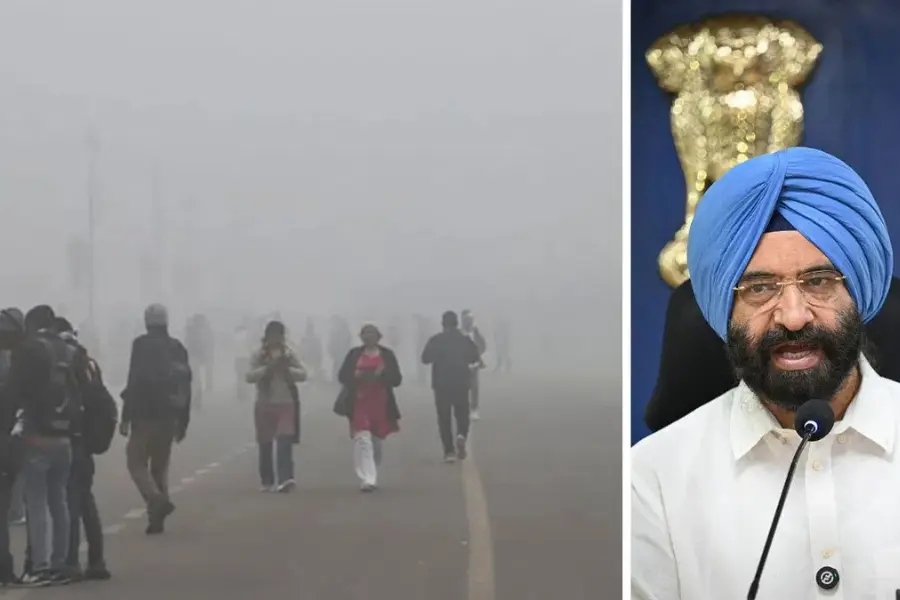
The Delhi government is planning a major overhaul of the Pollution Under Control (PUC) certificate process. It is one of the significant measures in its intensified fight against the city’s declining air quality. Environment Minister Manjinder Singh Sirsa disclosed the proposed changes on the 17th of December, 2025. He stressed that the present system is not only outdated but also fraught with problems.
Why the PUC System Needs an Overhaul
The Environment Minister pointed out that many PUC centers continue to use old and ineffective equipment. Also, they lack sufficient control over their operations. These weaknesses render the execution of emission inspections ineffective even tough vehicle pollution remains one of the major contributors to Delhi’s air quality crisis.
To solve such problems the government is going to establish a third-party monitoring system for the supervision of the functioning of PUC centers. It is expected that this measure will create a greater presence of PUC centers in the city. Thus also resulting in the higher accuracy and consistency of emission testing from them. This announcement has been the main focus around most of the recent news updates concerning environmental reforms in Delhi.
Push for Carpooling and Smarter Traffic Management
Besides the PUC reforms, Delhi administration is working on a city-centric carpooling application. The minister pointed out that in Delhi, although there is a rise of private vehicles, there is no structured carpooling system yet.
“We are working on a carpooling app for Delhi,” he said. “There will be options for people to use their vehicles for carpooling or to travel by carpool.” The main objective of the project is to reduce the number of single-occupancy vehicles, traffic congestion, and total carbon emissions.
In addition, the government is looking to set up a unified traffic management system. It is to make traffic movement smoother and reduce air pollution caused by vehicles standing idle. These measures are aligned with the recent trends in the news which mainly revolve around sustainable urban transportation.
Tie-Ups with Google Maps and Map India
To improve its traffic management system, the Delhi administration is willing to cooperate with Google Maps and Map India. The minister revealed that discussion with Google Maps is imminent to determine the most troublesome traffic areas based on the data available, which is also useful for the development of the carpooling app.
Using current and past traffic data, the authorities want to get a thorough understanding of the congestion patterns and, on that basis, come up with more effective strategies for traffic flow in the entire city.
In a separate major announcement, Minister Sirsa said that Delhi administration has signed a Memorandum of Understanding (MoU) with IIT-Madras to conduct innovative research aimed at combating air pollution.
The partnership will focus on identifying and evaluating smog-absorbing materials, particularly the photocatalytic titanium oxide-based surfaces. Such surfaces can be installed on roads and other areas to absorb nitrogen dioxide and carbon-based pollutants from the air.
Smog-Absorbing Innovation: A New Promise
The minister said that his department had proposed a technology-based research project on these photocatalytic surfaces earlier this year. The technology has already been adopted in some cities worldwide but not yet in India.
If the condition in Delhi proves to be suitable for the implementation of these solutions, then pollution in the places where people live, travel, and work, can be drastically reduced. This project has led to a growing number of recent news stories concentrating on scientifically-backed strategies for saving the environment.
The Delhi government is apparently employing a multifaceted strategy to address its air quality problems that have been plaguing the city for a long time by including plans to overhaul the PUC system, encourage carpooling, improve traffic management, and use advanced technology for investigating pollution control issues. The next few months will be crucial in determining the actual implementation of these plans.


sportwetten quoten vergleich
My site … basketball punkte wetten
Real Madry Napoli Wynik Bukmacher najwieksze
basketball wett tipps heute tipp ai
erfahrungen