
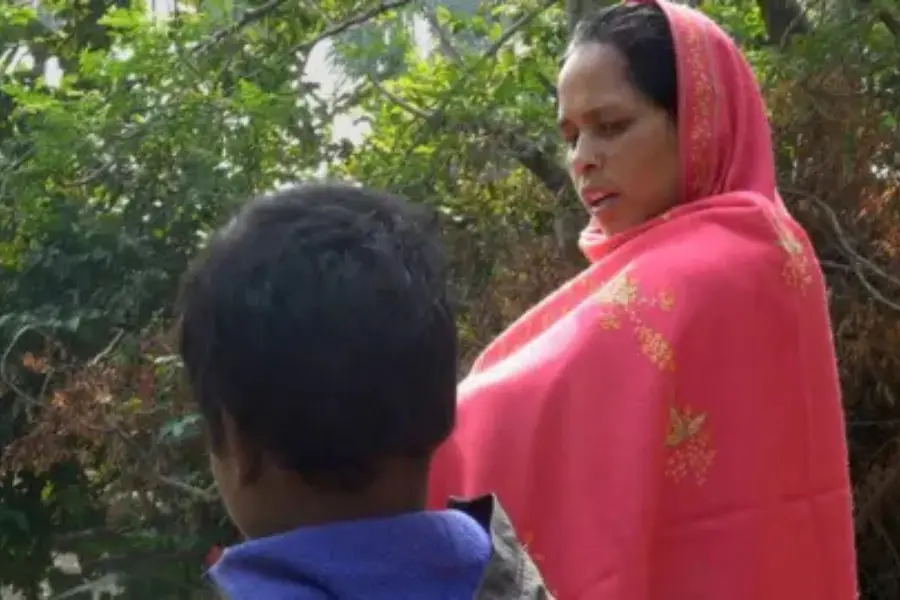
A Family’s Struggle Across Borders
An extremely disturbing incident has once again put a spotlight on India’s deportation policies. Sunali Khatun, a 25-year-old female domestic worker from West Bengal, was seized in Delhi along with her husband and small child in June. They were sent back to Bangladesh as a result of being identified as an illegal immigrant. She says that the experience left her in shock. She was very worried about her child’s future while she was pregnant with her own child.
“I was so scared that my child’s nationality might change if he was born in Bangladesh”. She says when talking about the time she spent on the other side of the border prior to her return to India earlier this month.
Imprisonment, Removal and Confinement
According to the information that came out of the police station in Delhi, Ms Khatun, her husband Danish Sheikh, their son of eight years, and three neighbors were arrested by Delhi police. This was after it was reported that officials had found no legal documents for their entry or residence in India. All of them are Muslim speakers of Bengali. Her seven-year-old daughter was lucky to be with family at that moment.
Ms. Khatun explains that the group was flown to the India-Bangladesh border where they were “pushed” into Bangladesh. She claims that they were abandoned in a forested area. Also, they were beaten when they tried to return to India. The Border Security Force (BSF) has been asked to respond to these allegations.
With no clear way home, the group went to Dhaka after getting help from locals. But Bangladeshi officials caught them for illegal entry and put them in jail. Ms. Khatun alleges that the jail was a very uncomfortable place for a pregnant woman, with hardly any food and no toilet facilities.
Criticism of the Government and Lack of Protocol
The story of her deportation was covered by the media across the country. The West Bengal government also gave a very vocal response to it. This charged the BJP-led central government with acting recklessly without doing proper verification. According to the protocol, the home state of a suspected migrant is supposed to confirm their identity before the person is sent back.
Samirul Islam, chairman of the West Bengal Migrant Workers Welfare Board, said that in Ms Khatun’s case the step was skipped. Rights activists argue that mistakes like these happen more and more frequently. Particularly in cases of alleged illegal immigration in recent news updates.
Magnitude of Recent Deportations
While Delhi has not released any official numbers. Sources from the Bangladesh government told the BBC that over 1,200 people were “illegally pushed in” just in May. All India Radio also reported that about 700 people were sent back from Delhi during that month.
India and Bangladesh share a long border of 4,096km. It is not very well guarded and for quite some time there have been people moving from one side to the other for work or shelter. However, activists argue that the recent harsh measures are mainly aimed at Muslims who speak Bengali. Also, they are carried out very often without following legal procedures.
Intervention by the Supreme Court
The Supreme Court of India gave permission last December for Ms. Khatun and her son to come back to India temporarily on compassionate grounds while her citizenship case is being looked into.
At present, she is living with her parents in West Bengal. Her husband who is out on bail, is in Bangladesh and apart from his family for more than three months.
During video calls, she says that he doesn’t stop crying and breaking down emotionally. He keeps on asking her to come and get him from here.
A Life Characterized by Anxiety and Doubt
Among the things on her mind is the unceasing worry about her husband’s fate and the safety of her family along with the great relief of her unborn child’s right to citizenship.
Ms. Khatun, whose parents’ home is a small single-room shack, worries about how to provide food for her children, but at the same time she is determined not to make one particular decision.
“We might not be able to afford three meals a day here, but I am still not going back to Delhi,” she says.
Her question stays there as a great criticism of the system: “We are not from Bangladesh, we are Indians. Why did they have to treat us like this?”




I have not checked in here for a while because I thought it was getting boring, but the last few posts are good quality so I guess I will add you back to my everyday bloglist. You deserve it my friend 🙂
Casino enthusiasts looking for different slot titles and digital gambling entertainment may explore goospin casino while checking promotions, payment options, platform usability, and other important aspects of an online casino.
Great beat ! I would like to apprentice while you amend your web site, how could i subscribe for a blog website? The account helped me a acceptable deal. I had been tiny bit acquainted of this your broadcast provided bright clear idea
sportwetten tipps kaufen
Here is my web page … tipico basketball wetten [Shantae]
Really enjoyed reading this. I’ve recently been searching around for คลิปหลุดนักเรียน.
quotenvergleich wettbasis
My website … basketball wm Wetten (https://www.wfvision.com/)
Great information! I’m always searching for new options to อ่านมังงะ.