
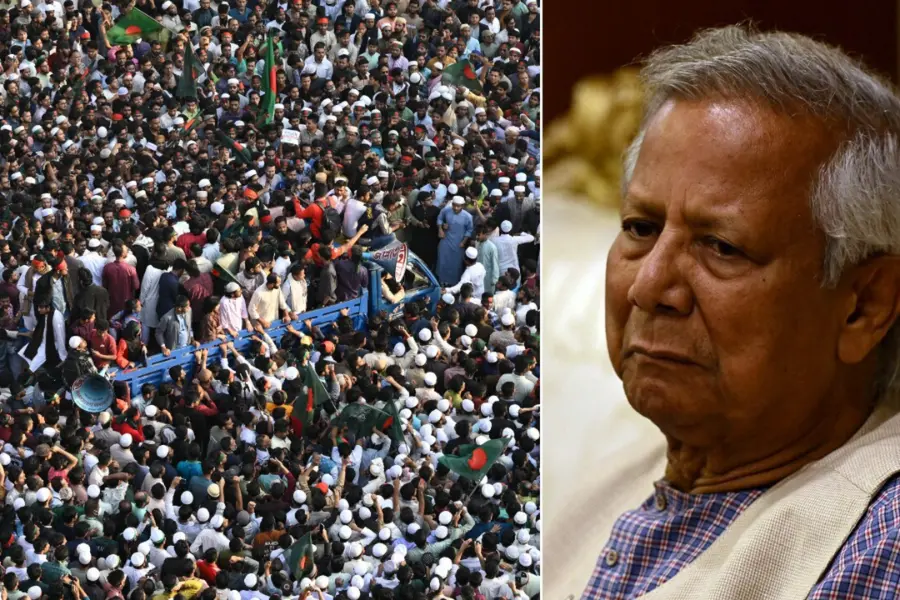
Sociopolitical tensions and divisions have been deepened by another horrific report out of Bangladesh. It is relating to a lynching of a Hindu man. The recent news updates has heightened tensions regarding law enforcement, communal harmony. The prevailing political climate before next year’s general election.
Facts on the Rajbari Lynching Incident
Amrit Mondal, age 29, also known as “Samrat”, was lynched this past Wednesday night. It was by a mob at a small village in the Pangsha sub-district of Rajbari. Approximately 3.5 hours from the capital city, Dhaka. The events unfolded shortly after a prior lynching of a Hindu individual named Dipu Chandra Das and subsequent burning of Dipu’s remains by a similar mob. Many Hindu people, as well as others of minority religions in Bangladesh, are now extremely concerned about the apparent escalation in violent acts of lynching aimed at Hindus.
Local police first reported that Mondal had previously visited a villager’s home to ask for payment for extortion. This led to some type of confrontation that escalated into violence. Mondal suffered significant injuries during the confrontations with the local residents that led to his death.
An initial investigation confirms that the murder was not related to communal hatred. In a press release, the interim administration has stated.
The event was stated as being linked to criminal activity versus being connected to religion by the police.
Officials confirmed, “The deceased was a documented large-scale criminal in extortion. Many other illegal actions.” They describe that Mondal has numerous charges. It included a murder charge, pending against him. The government claims that a number of news organizations. Social media users are spreading false information that could heighten sectarian violence.
Who was Amrit Mondal?
According to police sources who spoke to The Daily Star, Amrit Mondal was involved with the criminal group active in the area. They state that Mondal entered the area to collect extortion money. He was killed in a violent struggle; investigations continue by the police to find those responsible and maintain due process.
Political Context: The Return of Tarique Rahman
The lynching has occurred at a time of political instability. Tarique Rahman, the leader of the Bangladesh Nationalist Party (BNP) and candidate for prime minister, has returned to Bangladesh after 17 years of voluntary exile. Rahman’s return has reinvigorated political dialogue and he has promised safety, justice, and stability should his party be successful in the upcoming elections.
Analysts consider closely monitoring these occurrences within the interim government’s transitional phase as an indicator of how well the interim government is performing at upholding law and order.
Reports have surfaced that a senior representative of the Office of Yunus has resigned due to an internal conspiracy to murder radical leader Sharif Osman Hadi. Multiple news sources have reported that the alleged conspiracy was meant to create chaos before the upcoming elections.
There are increasing concerns about this issue because both government and civil society organizations have denied any communal element, yet there is still considerable alarm among civil society organizations and global observers as background reports to the report point to individuals who have suffered lynchings of various sorts. Pressure for more rigorous investigations and increased protection for minorities is mounting as Bangladesh approaches an important election.
The next few months will be critical in determining whether the interim government will be able to restore confidence with the public and provide for justice during a more divisive period.