
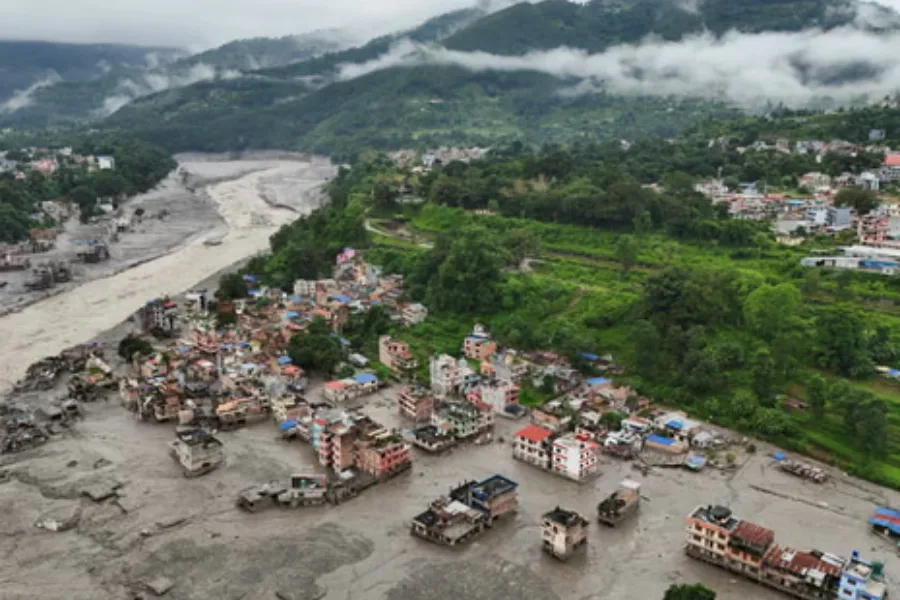
Nepal Floods 2026: Nepal is experiencing huge flash floods. It seems to be responsible for around 160 deaths and about 750 people missing, including 133 Indians. The flash floods were caused by the very significant glacier collapse observed in Tibet. Rescue teams are still trying to reach the survivors in villages, bridges and hydropower stations. These have been heavily affected by the disaster.
This tragedy has become one of the most significant news pieces in South Asia. It is being closely monitored by both India and Nepal.
Flooding Due to Glacial Collapse, not an Earthquake
US Geological Survey officially confirmed that the flooding occurred due to glacier collapse and not due to a 4.4-magnitude earthquake, as it was originally said.
USGS claims after further analysis of seismic readings and satellite images. It turned out that the seismic waves were caused by the glacier collapse rather than the earthquake that took place.
The glacier collapse resulted in flooding downstream of the river causing serious damage in Nepal and some areas of Tibet as well.
According to reports, around 162 people have died, while over 750 remain missing, including a significant number of Indian citizens. A number of hydroelectric projects in the area where flooding occurred have suffered considerable damage, halting the generation of electricity and local power supply.
Efforts to conduct rescue operations in difficult terrain continue with the involvement of police personnel, local authorities, and local volunteers.
Indian Government Issues Emergency Helpline Numbers for Those Affected
The Indian Embassy in Nepal has published emergency helpline numbers for those Indians affected by floods:
+977 985 131 6807
+977 970 910 7500
Indian officials have urged people who are currently in Nepal to contact the embassy for assistance, queries, and urgent help.
India Monitors Flood Situations Along Its Borders
India’s Ministry of Home Affairs (MHA) has stated that it is keeping close watch on water levels after flooding occurs.
Officials have expressed fears that the rising water level from Nepal might reach some of the border areas, notably Bihar and Uttar Pradesh. Authorities are closely observing the levels in rivers and reservoirs in order to prevent the risk of flooding in lower parts of India.
Rescue operations continue
Search and rescue teams are persisting with efforts to find missing individuals, even amid difficult weather conditions and compromised infrastructure. Authorities are concerned the number of fatalities may increase as access to isolated villages becomes easier.
The flash floods in Nepal have once more emphasized the rising dangers of glacial disasters in the Himalayan area, where climate-related occurrences are increasingly endangering communities and infrastructure.
As rescue efforts persist, this disaster stands out as one of the most important recent news updates, with Nepal and India collaborating on relief and assessing the humanitarian conditions.