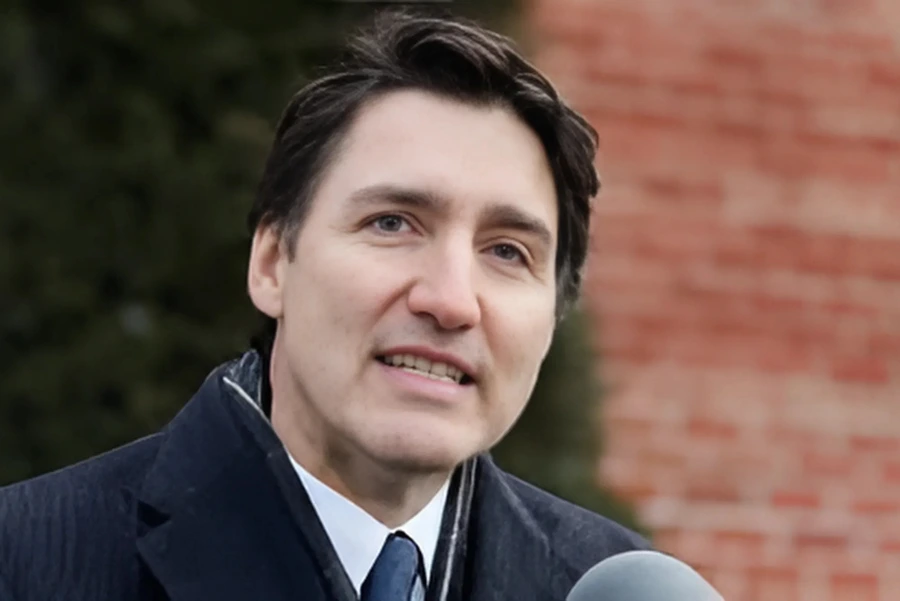
Recent news updates state that Justin Trudeau has firmly rejected U.S. President-elect Donald Trump’s suggestion of using economic force to make Canada the 51st U.S. state. Trudeau stated, “There isn’t a snowball’s chance in hell that Canada would become part of the United States.”
Trump’s Proposal and Justifications
At a Mar-a-Lago press conference, Trump proposed using economic measures, rather than military force, to annex Canada. He criticized the U.S.-Canada border as an “artificially drawn line” and claimed that merging the two nations would enhance national security. Trump also alleged that the U.S. subsidizes Canada by $200 billion annually, referencing the trade deficit and other factors.
Canadian Leaders’ Unified Response
Trudeau emphasized the mutual benefits of the existing trade and security partnership between Canada and the U.S. Foreign Minister Mélanie Joly criticized Trump’s comments, highlighting his “complete lack of understanding of what makes Canada a strong country.” Conservative leader Pierre Poilievre also dismissed the idea, asserting, “Canada will never be the 51st state. Period. We are a great and independent country.”
Trudeau’s Resignation Announcement
in the Recent news updates Amid these tensions, Trudeau announced his intention to resign in the coming months, citing internal party pressure due to declining popularity. The Liberal Party faces a challenging election, with polls predicting a significant victory for the opposition Conservatives. Trudeau’s departure marks the end of his nine-year tenure as prime minister.
Implications for U.S.-Canada Relations
Trump’s proposal and Trudeau’s resignation introduce uncertainty into the future of U.S.-Canada relations. The incoming Canadian leadership will need to navigate these challenges, balancing national sovereignty with the economic and security interests shared by both nations.
Final Verdict
Canada’s political leadership stands united against any suggestion of annexation by the United States. As the country prepares for a change in leadership, the commitment to Canadian sovereignty remains clear.
For more details on Trump’s proposal and Trudeau’s response, read the full story at The News Buzz.




The detail about President-elect Donald Trump’s suggestion of using economic force to make Canada the 51st is the part that stuck with me — it is concrete enough to argue with. As a light side note, mimicparty.me is a free browser party game I have been using between reading sessions.
Focusing on President-elect Donald Trump’s suggestion of using economic force to make Canada the 51st clarifies the trade-off better than a vague summary. Separately, if you want a short break, krillion.me is a free browser word game with no download.
What clicked for me was President-elect Donald Trump’s suggestion of using economic force to make Canada the 51st — more useful than the headline alone. Off-topic but worth a bookmark: noillirk.app, a daily word-guessing game.
An update for readers finding this later: Trudeau announced on January 6, 2025 that he would step down once the Liberals chose a new leader. Mark Carney won that race in March and was sworn in as Prime Minister on March 14, 2025, then led the Liberals to a win in the April 28 federal election. The ‘snowball’s chance’ quote came during that handover period.
I maintain Pirate Shop Tokens, an independent Fortnite guide; our reward expiry and deadline page is here: https://pirateshoptokens.com/pirate-shop-token-expiry/
The most useful part of this January 8, 2025 report is how clearly it separates the arguments. Trump’s Mar-a-Lago remarks are presented as an economic rather than military proposal, including the claim of a $200 billion annual subsidy and the description of the border as an “artificially drawn line.” Against that, Trudeau’s “snowball’s chance in hell” line sits alongside Mélanie Joly’s criticism of a “complete lack of understanding of what makes Canada a strong country,” and Pierre Poilievre’s statement that Canada will never be the 51st state. Given that the same piece also notes Trudeau’s plan to resign after nine years under party pressure, does the article treat this cross-party wording as a lasting signal of sovereignty, or mainly as a snapshot of that moment in the relationship?