
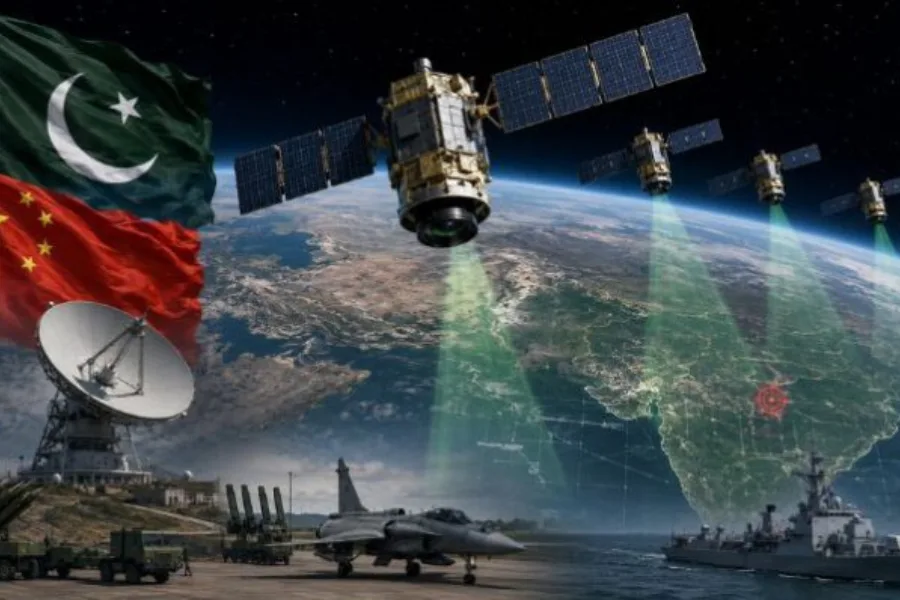
South Asia is currently experiencing a new phase of strategic rivalry in the sphere of outer space. Rather than on land. Over just 16 months, Pakistan has dramatically increased its space-based observation capabilities by launching six Earth-observing satellites. According to analysts, this could potentially enhance Pakistan’s ability to monitor activity throughout India.
Therefore, the development has become increasingly prominent in the recent news updates. It reflects the growing importance of space-based technologies when it comes to ensuring the security of the region.
Extension of Pakistan’s Space Program: A Rapid Movement Forward
SUPARCO, Pakistan’s national space agency, was established in 1961. This has historically had a small satellite program. In the period from January 2025 to April 2026, Pakistan launched its sixth Earth-observing satellite. With each new satellite utilizing space-based optical imaging, remote-sensing and hyperspectral imagery.
This acceleration is representative of a dramatic shift in the use of space as an instrument for the pursuit of intelligence and surveillance in previous decades. So this was an evolving commitment on the part of Islamabad to using these types of technologies.
Why are these satellites so critical?
According to experts in defense and space, the importance of this particular satellite constellation lies in what they can do together as an entire system. They are capable of producing high-definition images, capturing changes that take place on the Earth’s surface, detecting hidden or camouflaged objects. Also, providing continual monitoring of important locations.
One of the foremost satellites that was launched in October 2025 was HS-1. It utilized hyperspectral imaging. The launch of this type of satellite will enable the detection of various materials and uncover and locate objects that cannot be detected using traditional optical sensors.
According to reports, two recent satellites, PRSC-EO2 and PRSC-EO3, have both utilized superior imaging systems and artificial intelligence (AI)-based data processing. This could increase the effectiveness and accuracy of intelligence gathering.
The Role of China
Much of Pakistan’s recent capacity has been supported by Chinese assistance. Most of the satellites sent into orbit were carried on Chinese rockets. Other satellites have been developed via joint ventures between Pakistan and China utilizing Chinese technology and expertise.
Analysts propose that the collaboration could extend beyond launches to include satellite design, technical assistance and data sharing agreements.
There is independent confirmation that PRSC-EO3 was launched into an orbit designed to allow for continuous observations of South Asia. This means that Pakistan and northern India are able to be observed more regularly, with particular emphasis on Jammu and Kashmir.
Impact on India
Furthermore, Experts believe that the expanding network of satellites will provide Pakistan with additional situational awareness regarding military activity, infrastructure projects and strategic enhancements in and around the region.
As India continues to be a significant space power, several of the strategic satellite missions that it has engaged in have faced challenges in recent years.
Analysts in defense contend that upcoming security issues might increasingly rely on intelligence capabilities based in space. With Chinese assistance, Pakistan is bolstering its orbital surveillance system. Therefore, this is expanding the rivalry for strategic dominance in South Asia beyond the planet’s surface.