
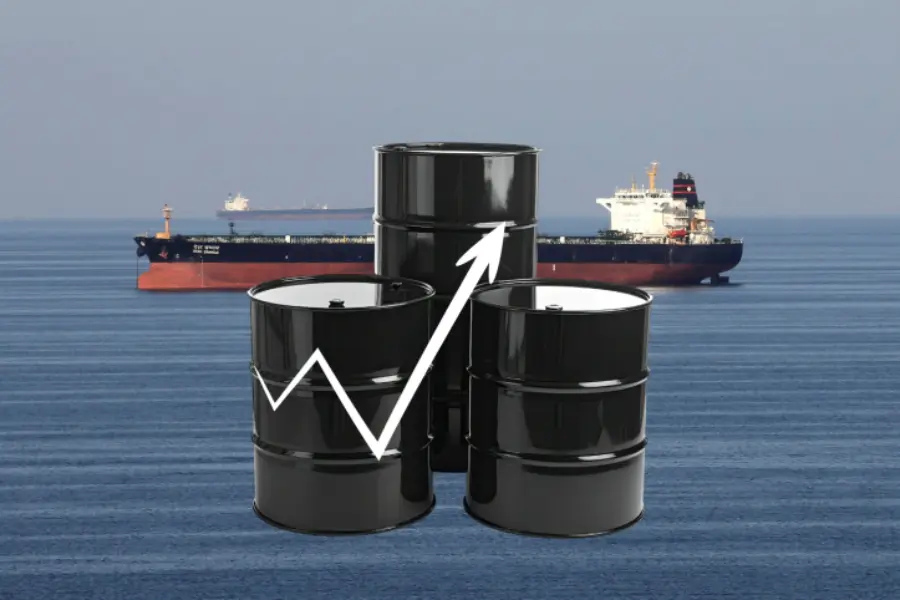
The significant rise in global oil markets resulting from increased tensions in the Middle East that have raised fears of an extended period of supply interruption, has been reflected by the skyrocketing value of oil relative to the decline experienced in Asian stock markets. Recent news updates reveal that the escalating tensions between the US, Israel and Iran have created unreliability in the international energy markets.
Oil Pricing Over $110 per Barrel
Oil has drastically increased in value during early Asian trading hours on the futures exchange. Internationally traded Brent Crude jumped by approximately 24% to around $114.74 per barrel while WTI (Nymex light sweet crude) increased by more than 26% to reach over $114.78 per barrel.
The basis for these increases is the recent increase in military attacks in Iran against vital infrastructure, including oil storage facilities. Market analysts speculate these increases in price have resulted due to the worry over how this volatile situation could affect the operation of global energy supply chains.
Experts warn that if military conflicts continue to escalate, prices could reach above $150 per barrel within weeks.
Shipping Disruptions From The Strait Of Hormuz Cause Global Concern
Another primary reason for the rise in price is the increase in disruptions to shipping through the Strait Of Hormuz. Nearly 20% of the world’s supply of oil will typically transit through this small shipping lane.
Nevertheless, maritime traffic has almost come to a standstill since the escalation of the conflict, resulting in millions of barrels of crude oil and liquefied natural gas being trapped in the Gulf area. This has caused concerns among governments and companies globally that depend significantly on energy exports from the Middle East.
Asian Stock Markets Decline Significantly
The geopolitical unrest also shook financial markets throughout Asia. Japan’s Nikkei 225 declined by over 7%, and Hong Kong’s Hang Seng Index decreased by more than 3%.
In Australia, the S&P/ASX 200 fell by over 4%. South Korea’s KOSPI suffered significantly, dropping over 8%, leading to a temporary trading pause via a circuit breaker.
These reductions illustrate that investors are becoming increasingly concerned with the economic ramifications of continued hostilities taking place in one of the world’s most important areas for energy production.
New Leadership in Iran during Crisis
Iran has announced that in response to the deepening crisis, Mojtaba Khamenei will take over as its next Supreme Leader upon his father, Ali Khamenei’s death. The transition of power continues to indicate Iran remains firmly under the control of its hardline leaders amidst a time of significant upheaval in the country.
The transition of leadership is taking place at the same as the United States and Israel are conducting airstrikes throughout Iran.
The Impact of Global Economic Forces
Rising Oil Prices can Lead to Negative Consequences for Global Economies. Higher crude oil prices typically lead to higher costs for jet fuel, transportation, and fertilizers which in turn will lead to increased operating costs for both consumers and businesses on a global scale.
While former President Donald Trump referred to rising oil prices as a “small price to pay” for addressing the threat the Iranian government poses with respect to their nuclear program. However, economists warn that if oil prices keep going up it will ultimately result in inflation and an impediment to economic growth.





cj791w
Really insightful article! It’s great to see platforms like ggperya casino prioritizing secure, fair play & easy local payments – crucial for responsible gaming. KYC & 24/7 support are huge positives too! 👍
**boostaro**
Boostaro is a purpose-built wellness formula created for men who want to strengthen vitality, confidence, and everyday performance.
**aquasculpt**
AquaSculpt is a high-quality metabolic support supplement created to help the body utilize fat more efficiently while maintaining steady, reliable energy levels throughout the day.