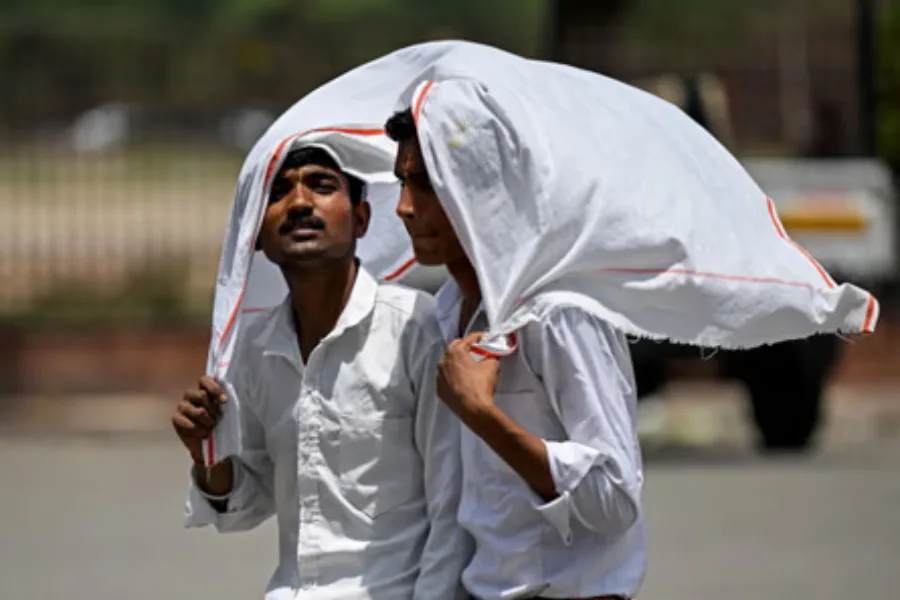
The rising temperatures in India are creating an increasing crisis for many informal workers. Those who do their jobs outside for long hours. Casual delivery drivers, street vendors and construction workers are suffering from exhaustion, difficulty sleeping and a decrease in productivity. It is because of temperatures that are too hot to work outside. This is due to increased frequency of extreme heat. Heat waves as affected by climate have created a significant health issue for workers in South Asia.
Air Pollution Creates Healthy Worker
Jalaj a 24 year old grocery delivery worker from Delhi. Delhi has just experienced its warmest day in 2 years at the end of May and its hottest night for 14 years. He is unable to get enough rest at night due to living in a small room with little airflow during the warm nights. He is already feeling tired before he starts his 12 hour shift of delivering groceries.
The low temperatures on Monday morning of 30 degrees Celcius. Also, the high temperatures on Monday of over 45 degrees Celcius have made it hard to work outside this week.
Experts stated that the increase in nighttime temperatures will also slow the recovery of workers from the heat of the daytime. When they return to work since they are already experienced exhaustion from the heat at the end of their last workday.
New Report Highlights Growing Urban Heat Crisis
Most recent report assessed conditions in Delhi, Dhaka, Kathmandu, Jakarta and Quezon City in regard to heat and the increasing difficulty of working outdoors.
Researchers have determined that heat retention in cities and extreme nighttime temperatures are preventing many informal workers from ever being able to recover. It is from the impacts of working in elevated temperature settings. Informal workers living in dense clusters of housing without adequate ventilation or access to reliable electricity were the most affected. The presence of inadequate opportunity for rest increases an informal worker’s susceptibility to heat illnesses and decreases productivity levels and earnings.
Economic Pressure Adds to Health Risks
According to the International Labour Organisation (ILO) (2000), over 70% of workers in Asia are exposed to heat at some point during the course of their workday. The hardest hit countries are those with the largest number of informal workers. Particularly India (almost 90% of all workers).
The results based on responses from more than 2,200 migrant workers indicates almost 80% of those surveyed experienced interruptions to their income due to heat. Many respondents cited losing income due to their inability to complete their entire scheduled shift. Incurring additional costs on a weekly basis from water consumption. Medicines due to heat-related health conditions and transportation in order to get to the hospital for medical care.
Frequent symptoms reported by informal labourers who work long hours outside and are exposed to excessive heat include dizziness, headaches, exhaustion and diminished focus.
“My Head Spins From the Heat” Ajay Kumar, a 32-year-old vegetable vendor in Gurugram. He spends many hours shifting a heavily laden three-wheeled auto rickshaw through the city’s congested streets after buying fruits and vegetables from a wholesale market several-kilometers away. “My head spins everyday with heat.” Kumars own words, while also stating, “It is my only means of providing for my family.” Ajay Kumar who lives in a very small room with his family (wife & 4 children). Also, he is unable to purchase any air conditioning units or other cooling devices. Many times, his family will sleep on their open terrace because it is too hot inside the house. However, they still have trouble sleeping.
Need for Improved Heat-Public Protection Strategies
While some state governments have created heat action plans, water kiosks, heat early warning systems (HEWS) and heat advisories to reduce the heat experienced during extreme heat events. Researchers assert that the current methods are mostly reactive and that sustainable solutions are needed.
Experts also emphasize that the need for long-term sustainable solutions. Such as improved housing, more opportunities for cooling, worker protection. Also, better planning procedures to minimize exposure to extreme heat. This will be vital as climate change continues to cause more frequent and more severe heat waves. Thus, protecting workers at risk of being affected by extreme heat is an important topic of public health news and economic development.